Tuesday, April 5, 2011

The Long Lives of Airplanes: The Unseen Danger


Imagine that you are just getting comfortable on an airplane. The pilot has removed the “buckle your seatbelt” sign and the flight attendants begin strolling the aisle and offering beverages. You click through the movies available on the small television in the seat in front of you and prepare for your long journey to California, New York, or wherever your destination may be. You slowly sink deeper into your seat and begin to relax. All of a sudden you hear a loud BANG and your peaceful state immediately vanishes. Panic strikes the rest of the passengers of the aircraft as soon as it strikes you. The oxygen masks deploy from overhead before you realize what’s happening. Millions of questions race through your mind such as: “Is this an attack?” and “Are we going to crash?” This is not an attack on the airplane, but the latter could be true, all because of what started out as microscopic cracks in the aluminum of the plane. These cracks gradually grew over time, and resulted in a chunk of your airplane’s roof to fly off. In this high altitude, you have just seconds to put your oxygen mask on before you start to get light headed. Once this occurs, it is all too difficult to even get your oxygen mask on.

Each time an airplane takes off and lands, these microscopic cracks grow in quantity and size because of the pressure and depressurization. A Southwest aircraft taking off from Arizona lived a long life of 15 years. It had been pressurized and depressurized about 39,000 times. What this means for the passengers is that this plane had taken off or landed 2,600 times a year. Some feel that it’s a bit too risky to fly in planes at all. If you knew that the plane you were about to be traveling thousands of miles in had made similar trips about seven times earlier that day, would you rethink your decision? I know I would.

The FAA has now declared that many of Boeing designed airplanes be inspected for cracks such as this Southwest jet had. When Southwest was questioned about their other airplanes, they played the blame game by putting most of the responsibility on Boeing. Boeing Co. is now doing what they can to assist in the inspections of planes. But is this enough?

Even if all of these airplanes pass inspection, they still have an average lifespan of 30 years. This means that Southwest’s plane that had its roof ripped off was only halfway through its life. Considering how much these planes go through in their life, this seems like a pretty high number. The fact of the matter is: the passengers don’t know much about these giant vessels flying through the air. If I’m going to be putting my life in the hands of these aluminum machines, I’d at least like to know some information about them. Say, their age and past inspections. Knowing that a plane is at the end of its lifespan may cause me to reconsider which airline I choose the next time I book a flight.

--Nicole

Article: Christie, Bob, and Joan Lowy. "FAA to require new safety inspections on Boeing 737s." Travel News. MSNBC, 5 Apr 2011. Web. 5 Apr 2011. <http://www.msnbc.msn.com/id/42402550/ns/travel-news/>.

Picture: Southwest accident prompts inspection order. Web. 5 Apr 2011. <http://www.cbc.ca/gfx/images/news/photos/2011/04/04/li-southwest-620-00453024.jpg>.

Saturday, April 2, 2011

Libya: A Presidential Gamble

  AP Photo

Barack Obama’s initial decision to get militarily involved in Libya was never the most popular in the United States. Polling numbers were not overwhelming and the voters made it clear that they were only cautiously optimistic about Obama’s handling of Libya. A poll conducted by CNN showed a 70% approval rating for the president’s handling of the situation* There is significant downside in Obama’s gamble because he faces criticism from both sides of the aisle. Liberals have been complaining about the cost to the taxpayer of getting our military involved in a third war and conservatives have criticized the lack of established goals and exit strategy. For once, criticism has not been split across party lines.

             * It is well-established that the public supports for wars are highest at the beginning, before starting a slow decline. Meaning that no matter what, his Libya approval ratings will drop.

As Obama starts to gear up for his fight for re-election, he has lost his majority in the House of Representatives in the slaughter of the 2010 midterms. He has to find a find a way to rally his base and close the enthusiasm gap. Liberals are never going to use a war as a way to rally around their candidate. One of the major reasons that he won the 2008 election was the historic turnout of African-Americans and other liberals. He may not find the same turnout from the black population because it will no longer be an historic election. The president is going to have a hard time getting re-elected without seeing a rebound in the turnout rate of Democrats. On the other hand, the Republicans have found a way to get their voters to show up at the polls. The Tea Party movement has re-energized a base that was apathetic as recently as 2008. Although candidates like Newt Gingrich* and Sarah Palin** have very high negatives, they could find themselves on the right side of the enthusiasm gap as a result of Libya.

               *Gingrich may have his own problems concerning Libya because of his constant flip-flopping.

               **Granted, Sarah Palin becoming the Republican nominee should encourage Democrats to return to the polls.

                It is my own personal belief that Libya will not become too big of a problem for Obama as long as the coalition continues to achieve their goals. However, if American soldiers start to die and Gaddafi holds on to power, I foresee a major problem for the president. If the war becomes a “quagmire”, I believe that Obama will have made a huge electoral mistake. I see no way that Obama can re-energize his base with a third unpopular war (and one that he started). Liberals will never turnout in huge droves for Obama if he continues to support an unpopular war. Conservatives are never going to vote for Obama, period. He would be gambling that he can win a national election with a coalition of only moderates. Given how energized the “far right” currently is, it is a very dangerous proposition for him and one that could lead to the election of a Republican president.


CNN Political Unit. "CNN Poll: Most Support No Fly Zone in Libya but Not Ground Troops – CNN Political Ticker - CNN.com Blogs." CNN Political Ticker - CNN.com Blogs. 21 Mar. 2011. Web. 29 Mar. 2011. <http://politicalticker.blogs.cnn.com/2011/03/21/cnn-poll-most-support-no-fly-zone-in-libya-but-not-ground-troops/>.

Picture from the Associated Press

Human Trafficking: The Seen versus the Unseen

Imagine being born into a world where your physical characteristics were used as tools for others' pleasure, where your dignity crumbled beneath your hands each day, and where your self-respect became the lost result of abuse, neglect, and cruelty. This is the lifestyle of many women today. Specifically in the red light district of New Delhi and in the brothels of Madrid and Manchester, women are forced into prostitution and abuse, sometimes by their own family members.  

The first article that I read on this subject explained how trafficking affects young women and the way a women’s right advocate is taking a stand. I found that girls are often tricked into marriage and are sold by their husbands. Zainab Salbi, a women’s right advocate, interviewed a brothel owner who explained that the “majority of prostitutes are trafficked women who have been sold into slavery.” One of the saved victims of trafficking, a young woman named Mina, reported that she was forced to sleep with about five to ten men a day and that she eventually came to accept prostitution and brutality as a way of life. One of Zainab Salbi’s goals is to save six trafficking victims. Unfortunately, this is a case of the seen versus the unseen – I did not realize how huge of an issue human trafficking was. 

Another article gave me more statistical insight into how widespread human trafficking has become and how often women are trafficked by their own family members. The article not only stated that “…the biggest illegal trade in the world is drugs and number 2 is human trafficking” (Andrew Wallis, head of anti-trafficking charity, UnseenUK), but also that “more than 80% of the victims…reported on the way back that their recruiter was someone that they knew before or that they’ve met through a friend or a member of the family” (Romulus Ungureanu, leader of Romania's fight against trafficking as Director of the National Agency Against Human Trafficking). One individual, Iana Matei runs a refuge for women who have been trafficked for prostitution. Matei stated, “Traffickers simply don’t feel they are doing anything wrong. Money is their God and worth making compromises for – so as long as they are making money, it doesn’t matter how they do it.”  

Both articles made me open my eyes to how big of an issue human trafficking has become. While we have many other issues throughout the world, there are many that are overlooked. I feel like human trafficking has become unnoticed, and because of that, it has escalated. Although it will take time to completely obliterate human trafficking for good, it’s worth putting the time and effort into. As the author of the second article I read stated, http://thecnnfreedomproject.blogs.cnn.com/2011/03/04/sex-slavery-a-family-business/ As human beings, no one, deserves to experience the brutality of human trafficking. 

--Mattie 

Articles: 
Wald, Jonathan. "Sex slavery: A family business." CNN. Retrieved March 28, 2011, from http://thecnnfreedomproject.blogs.cnn.com/2011/03/04/sex-slavery-a-family-business/. 

"The trafficked women of India's brothels." CNN. Retrieved March 28, 2011, from http://thecnnfreedomproject.blogs.cnn.com/2011/03/29/the-trafficked-women-of-india%E2%80%99s-brothels/?hpt=C2.

Let The Games Begin

There’s a reason we call it madness. It’s the 75 foot desperation shot that swishes through the net as time expires; the bracket-busting upsets and Cinderella teams that shock even the most seasoned analysts. It’s the overlooked foul or the questionable call that completely changes the outcome of the game. It’s the humanness of the tournament that makes it a free for all in which all 68 teams – no matter how seemingly insignificant – have a fighting chance at the title, but where no team – not even the most talked about, high seeded one – is ever safe from the determined underdog.
This is unpredictability personified, where luck and desire are just as important as how prepared you are, where there is never any shortage of unbelievable or surprising moments, and where only those who fight through any challenge thrown their way can return home victorious while everyone else leaves early with heads down and tails between their legs.
This is March Madness.
Most of the postseason mayhem is born out of unforeseeable upsets from the most unlikely of teams. The underdogs with nothing to lose and everything to prove, the Cinderella teams that rise from obscurity to find their place in history among the elite of the day. Last year it was the Butler Bulldogs, a team that no one saw coming and one whose half-court shot was just centimeters from making them the 2010 National Champions instead of the Duke Blue Devils.
Every year, looking at the final four teams in the tournament is like playing a game of Which One Doesn’t Belong. This year, four remain but none belong. Connecticut finished the regular season ninth in the Big East. Kentucky was supposed to be here a year ago, riding on the coattails of John Wall and DeMarcus Cousins. But they fell short of even a Final Four appearance and with most of that team in the NBA now, John Calipari was forced to start fresh. Butler is back but they also lost their star player, Gordon Hayward, to the NBA, leaving them without a vital piece of their game. But not one of these teams can compare to the unexpected emergence of Virginia Commonwealth University.
VCU went 23-11 and lost five of their last eight regular season games. No one thought that they even deserved a spot in the NCAA tournament over teams like Virginia Tech. But the Rams have silenced everyone who doubted them. From first four (play-in games that resulted from the expansion of the tournament field from 64 to 68 teams) to Final Four, it’s as if no one told these guys that they are an 11th-seeded team that should’ve gone home weeks ago. Instead, they’ve stuck around, ending the tournament dreams of five teams by an average of 12 points. Four of those teams include 6th-seeded Georgetown, 3rd-seeded Purdue, 10th-seeded Florida State, and number one seeded Kansas. All upsets. All predicted to send the Rams packing.
VCU has already made history, not only as the first team from the school to reach the Sweet Sixteen, the Elite Eight, and the Final Four, but also as one of the tournament’s most unlikely Cinderella stories ever. Yet, they’re not satisfied. “We still got two games left.” senior forward Jamie Skeen told Sports Illustrated's Tim Layden after the Rams took down Kansas.
It’s an outstanding accomplishment to get to the Final Four, but none of these teams want it to end here. The real madness starts now because while four remain, only one can reach the ultimate goal and earn the title of National Champions.
--Emily
Article: Layden, Tim. "Rocking The Chalk." Sports Illustrated. 4 Apr 2011: 38-46. Print.

Disaster in Japan

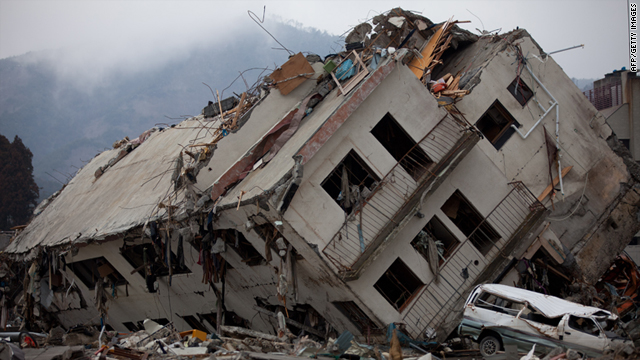
Flipping through the pages of The News & Observer, it was no surprise to see many articles about the disaster in Japan that occurred on March 11, 2011. As I began to read the articles, I expected mostly information about radiation and the reactions of Japan’s citizens to this catastrophe. For the most part, this was true – true until I came across an article entitled, “Japan long overlooked nuclear risk of tsunami.”

This article essentially blamed Japan for the tremendous devastation that occurred in the aftermath of the earthquake and tsunami. It claims that the magnitude of the tsunami was underestimated at Fukushima since the earthquake that struck in July of 2007 was so disastrous. This seems to be asking quite a lot out of a country that is still recovering from their last crisis. It also addresses the point that Japan’s location is so susceptible to tsunamis and earthquakes because it is surrounded by tectonic plates that frequently clash. However, no matter how prepared a country is for an earthquake, they can never be completely ready for a disaster of this level. Imagine if Japan evacuated their cities every time a serious crisis had the potential to take place. This could cause the country to go into debt, and most of its citizens would probably permanently leave to avoid the chaos. Obviously, Japan did not want another tragedy to strike, and am shocked by the way we can so easily put the blame on them.

Should Japan have better prepared for the possibility of another earthquake and tsunami? Yes, they probably should have. But rather than criticizing them and focusing on their past mistakes, it’s time for us to not make a mistake of our own. We should help Japan in their time of need. Pointing the finger at them for their mistakes will not help their country recover from this disaster any faster.  

--Nicole 
Picture: "Official: Quake, tsunami could cost Japan $300 billion." CNN World. Web. 2 Apr 2011.
<http://www.cnn.com/2011/WORLD/asiapcf/03/31/japan.disaster.budget/index.html?hpt=T2>.

Article: Onishi, Norimitsu, and James Glanz. "Japan long overlooked nuclear risk of tsunami." News & Observer 27 Mar. 2011, Print.